The history of chewing gum in Iran begins long before today’s shop shelves: with wild pistachio trees and a resin known as saqqez. Packaged gum, memorable brands and bubble gum joined the story later. This article traces the journey from traditional resin to factory-made gum.
Natural saqqez before modern chewing gum
Before factory-made gum became common in Iran, people in some regions collected and chewed resin from wild pistachio trees, including the baneh tree. The resin was known as saqqez and had other local names; Encyclopaedia Iranica records the name qandarun in the Isfahan area.
Wild pistachio trees grow in parts of western Iran, particularly in the Zagros region. Traditionally, saqqez was collected by making cuts in the trunk and gathering the resin. Chewing materials in Iran therefore had a history connected with natural products and local life.
Early references to chewing in Persian texts
Classical Persian texts mention a chewable substance called elk. For example, the poet Masud Saad Salman, who died in 1121 CE, refers to chewing elk in one of his poems. The reference shows a long familiarity with chewable materials in Persian language and culture, but we cannot be certain that every substance called elk was the same as wild pistachio resin.
In another historical account, the French traveler Guillaume Olivier wrote in 1796, around 1175 in the Solar Hijri calendar, about collecting saqqez from trees in the Mahidasht area. His report is evidence of resin collection at that time, but it does not establish exactly when people began chewing it. Both accounts are discussed in Encyclopaedia Iranica’s entry on saqqez.
When did factory-made gum reach Iran?
As packaged gum became more common, consumers gradually became familiar with a product different from traditional saqqez. Alongside imported products, gum production also developed in Iran, and packaging and advertising became part of its story.
However, the sources reviewed do not agree on the exact date of the first industrial-gum imports or the identity of the first Iranian factory. Some discuss the activities of a saqqez-making company in the 1310s Solar Hijri, while others give different dates. There is not enough agreement to name a year or producer as the definitive beginning of the industry.
From Parrot and Peacock to Rooster brands
For many Iranians, old gum names bring back memories of the pictures on their wrappers. Parrot Brand (Tuti-neshan), Peacock Brand (Tavus-neshan) and Rooster Brand (Khorus-neshan) appear in accounts of Iran’s gum market.
A study in Cinema Iranica refers to a 1954 newspaper advertisement for Rooster Brand and describes the Parrot and Peacock names as earlier. The advertisement shows the brand’s presence in the market at that time; on its own, it does not establish the factory’s founding year or prove that the brand was the first.
Bubble gum and a wider range of products in Iran
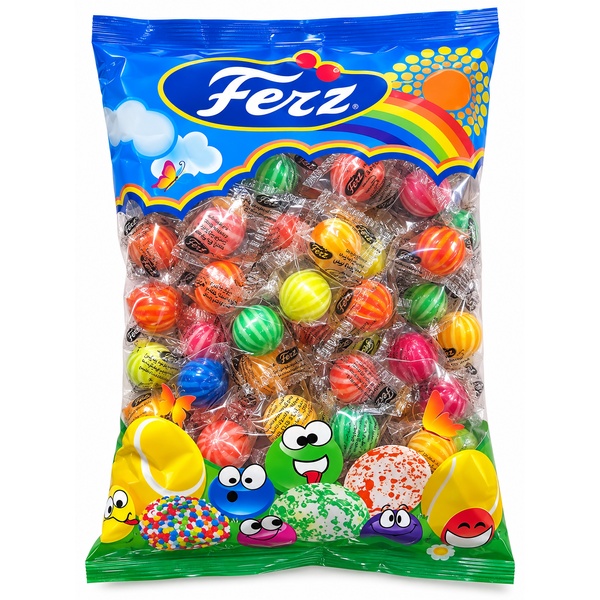
As the market expanded, gum appeared in different forms and packages and offered different ways to enjoy it. Bubble gum also became an amusement for children and adults.
According to Iran Namag’s study of Ali Khosrowshahi and the Minoo industrial group, Minoo introduced bubble gum in 1344 Solar Hijri (1965–66). Names such as Chic later became familiar in the market. This date concerns the product described and does not establish the first introduction of bubble gum in Iran.
How does traditional saqqez differ from factory-made gum?
Traditional saqqez is resin obtained from certain trees. Factory-made gum is a processed product whose composition depends on each producer’s formula; it may contain, for example, gum base, sweeteners and flavorings. Its ingredients cannot be determined from its appearance or name alone. Read the product’s own label for accurate information.
Why is the history of gum in Iran interesting?
The story is about more than a chewable treat. From resin collected in nature to colorful wrappers and brands that remain in people’s memories, each period reflects aspects of local taste and everyday life. Today, chewing gum and bubble gum are available in a variety of forms and packages.
For another part of the worldwide story, read the history of gum in America and its link to Mexico in Ferz magazine (in Persian).
Frequently asked questions
What did people chew in Iran before factory-made gum?
In some Iranian regions, natural saqqez collected from wild pistachio trees was among the substances people chewed.
Which was Iran’s first chewing-gum factory?
The available sources do not agree on the factory’s name or when it began operating. More historical evidence is needed for a definitive answer.
When was bubble gum produced in Iran?
One historical study reports that the Minoo group introduced bubble gum in 1344 Solar Hijri (1965–66). That report alone does not establish when bubble gum was first produced in Iran.